
This page contains affiliate links. If you make a purchase through one, we may earn a commission at no extra cost to you.
An “ADA room” label on a booking site tells you less than it sounds like it should. Here’s what that label actually guarantees, what it doesn’t, and what to actually ask before you book.
What “ADA Room” Actually Guarantees, and What It Doesn’t
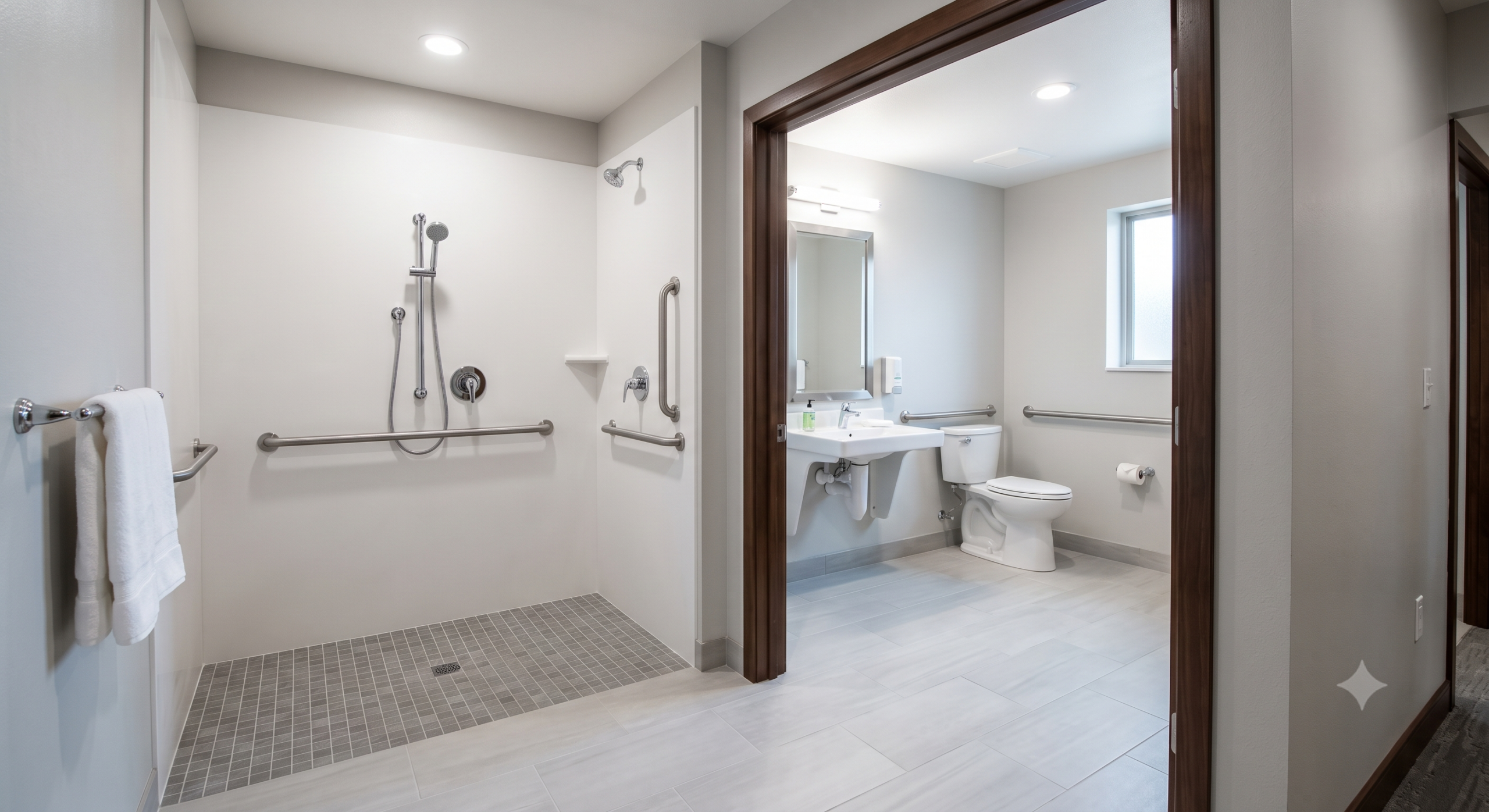
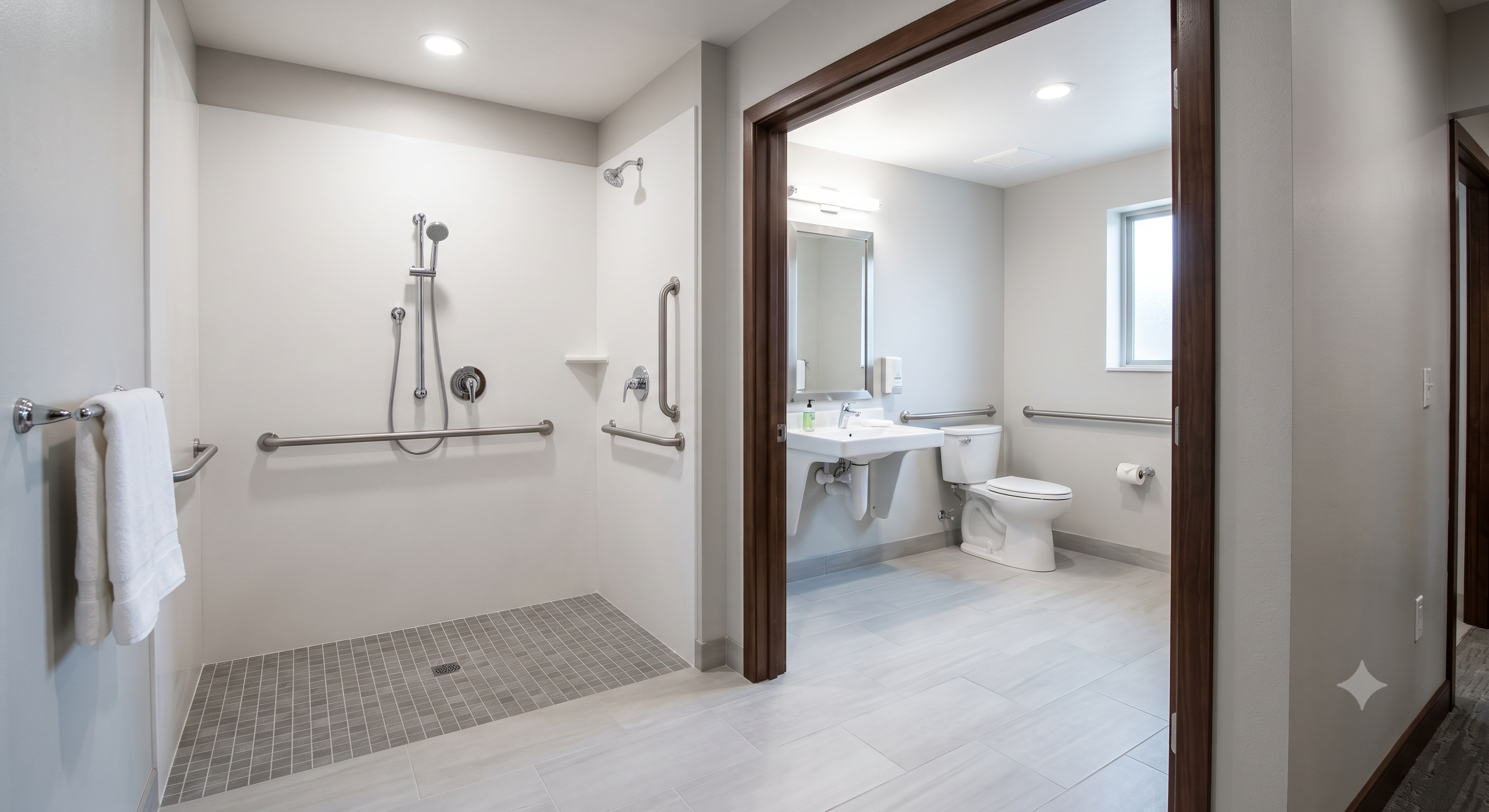
ADA-compliant rooms are required to meet certain baseline accessibility standards, but “ADA compliant” covers a range of actual configurations, and what one property offers under that label can differ meaningfully from another. A room might be ADA-compliant primarily for doorway width and grab bars while still having a tub-only bathroom rather than a roll-in shower, or vice versa. The label tells you a property has met a legal minimum — it doesn’t tell you which specific accommodations that minimum included for your specific needs. This is exactly why confirming specifics directly, rather than trusting the label alone, matters more here than almost any other booking decision.
What to Actually Ask Hotel Staff Directly
A short, specific list of questions gets you far more useful information than the “accessible room” checkbox on a booking site:
- Doorway width — specifically whether it accommodates a wheelchair or walker comfortably, not just “wide enough” in general terms.
- Roll-in shower vs. tub with grab bars — a meaningfully different experience, and not every “accessible” room includes a roll-in shower specifically.
- Bed height and whether it’s adjustable — relevant for anyone who needs a specific height for a safer transfer in or out of bed.
- Distance from the accessible room to the elevator, and whether that route is level or involves ramps/steps — a room can be internally accessible while still requiring a longer or more difficult path to reach from the elevator than a standard room would.
- Grab bar placement specifically, if you have a particular need — generic grab bars exist in most compliant rooms, but placement suited to your actual situation isn’t guaranteed by the label alone.
Hotels.com lets you filter for accessible rooms during search, which narrows the options worth calling about — but the phone call or direct message to the property afterward is still the step that actually confirms the specifics for your situation.
Request Photos Before Booking, Not After Arrival
Room photos on a booking listing are frequently of a standard room, not the specific accessible room type, even when the listing technically includes an accessible option. Requesting current photos of the actual accessible room directly from the property — most hotels can email a few photos on request — removes the guesswork and lets you confirm the layout, bathroom configuration, and doorway clearances visually before committing, rather than discovering a mismatch at check-in with no easy alternative available.
Search and filter for accessible rooms as a starting point, then follow up directly with the property for photos and specifics before finalizing.
Booking Directly vs. Through a Platform for Accessibility Needs
For a standard room, booking through a platform is usually simpler and often cheaper. For an accessible room with specific requirements, calling the property directly after finding it through a platform search often produces a better outcome — a direct conversation with hotel staff can confirm specifics no listing captures, and some properties hold their most accessible rooms for guests who call ahead with specific needs rather than releasing them through standard online inventory. Using a platform to find and compare properties, then finalizing the specific room details by phone, combines the convenience of comparison shopping with the accuracy of a direct conversation.
Beyond the Room Itself: Property-Wide Accessibility
An accessible room in a property with an inaccessible pool, restaurant, or lobby entrance still limits the overall stay. Worth asking specifically about: whether the main entrance has step-free access, whether elevators serve all guest floors (some older properties have stairs-only sections), and whether common areas like the restaurant, pool, or fitness area are actually usable, not just the guest room itself. A property’s overall accessibility, not just the specific room booked, determines how comfortable the full stay actually is.
Booking Early for Accessible Rooms Specifically
Unlike the general booking-timing advice that favors waiting closer to the date, accessible rooms are typically a small fraction of a property’s total inventory — often just one or two rooms per floor or even per property. This makes them meaningfully more likely to sell out first, well before the property as a whole is full. For a trip with specific accessibility requirements, booking further ahead than you otherwise might is a reasonable exception to general lowest-price booking timing, since availability matters more than shaving a percentage off the rate when the alternative is no suitable room at all.
See our broader guide on the best hotels for solo travelers over 50 for how accessibility fits into the rest of what’s worth checking before you book.
Frequently Asked Questions
Does every hotel with an “accessible” filter option actually have a roll-in shower?
No — “accessible” covers a range of configurations, and a roll-in shower specifically isn’t guaranteed by the filter alone. Confirm this specific detail directly with the property before booking if it’s a requirement.
Should I book an accessible room further in advance than a standard room?
Generally yes — accessible rooms make up a small share of total inventory and tend to sell out before the property as a whole, so the general “wait for a better price” advice applies less here than for a standard room.
Is it rude or excessive to ask a hotel for photos of the specific accessible room before booking?
Not at all — hotels handle this request regularly, and most are glad to provide photos, since it prevents a mismatch that would otherwise result in an unhappy guest or a room change at check-in.
What if the property can’t answer specific accessibility questions over the phone?
That’s itself useful information — a property that can’t answer basic questions about its own accessible rooms is a weaker bet than one that can, regardless of what the online listing claims.